
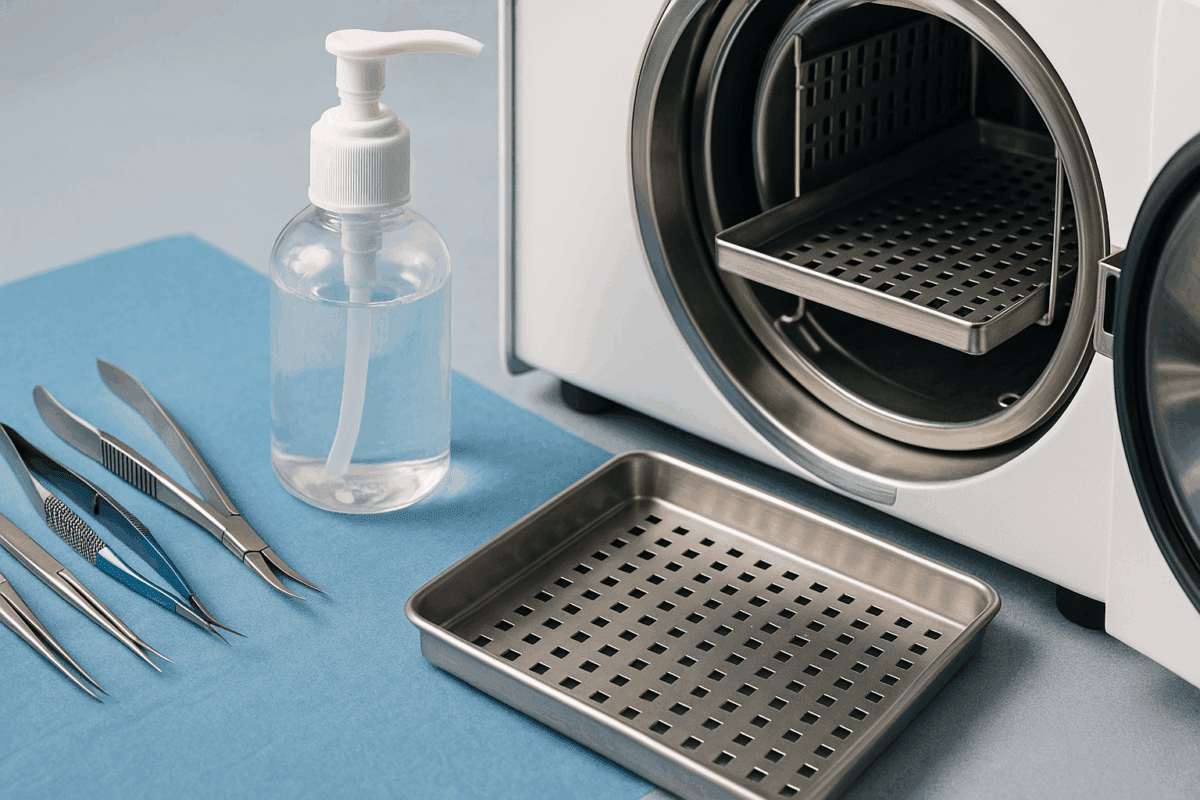
How to Maintain and Sterilize Ophthalmic Instruments Properly
Learn the best practices for cleaning, sterilizing, and maintaining ophthalmic instruments — including stainless steel and titanium tools — to ensure precision, longevity, and patient safety.
👁️ Introduction
Ophthalmic surgical instruments are among the most delicate and precise tools used in medical practice. Whether it’s a pair of fine forceps, scissors, or a trial frame, proper maintenance and sterilization are crucial to ensure accuracy, durability, and patient safety.
As a leading manufacturer and supplier of ophthalmic instruments in stainless steel and titanium, we’ve seen how small lapses in care can lead to corrosion, dull edges, or even surgical complications. This guide explains how to correctly clean, sterilize, and store ophthalmic instruments — so they last longer and perform flawlessly.
🧽 Step 1: Pre-Cleaning – The Immediate Rinse
Immediately after use, instruments should be rinsed under distilled or deionized water to remove blood, saline, or tissue residues. Never let the instruments dry before cleaning — dried debris can be difficult to remove and may cause corrosion.
Tips:
-
Use lukewarm water (not hot) for the rinse.
-
Avoid tap water as it may contain minerals that stain or corrode metal.
-
Keep titanium and steel instruments separate during pre-cleaning.
🧴 Step 2: Manual Cleaning – Gentle but Thorough
Use a neutral pH enzymatic cleaner specifically designed for surgical instruments. Gently brush the instrument’s joints and serrations using a soft-bristled brush or ultrasonic cleaner.
Avoid:
-
Harsh detergents or bleach-based cleaners.
-
Scrubbing with steel wool or abrasive pads.
-
Prolonged soaking, which can damage joints and delicate tips.
For titanium instruments, use non-abrasive cleaning agents to maintain their matte blue finish.
💨 Step 3: Rinsing and Drying
After cleaning, rinse instruments thoroughly with distilled water to remove detergent residues.
Dry them immediately using a lint-free cloth or medical-grade air gun.
Important: Never air-dry naturally — trapped moisture encourages rust or water spots on steel instruments.
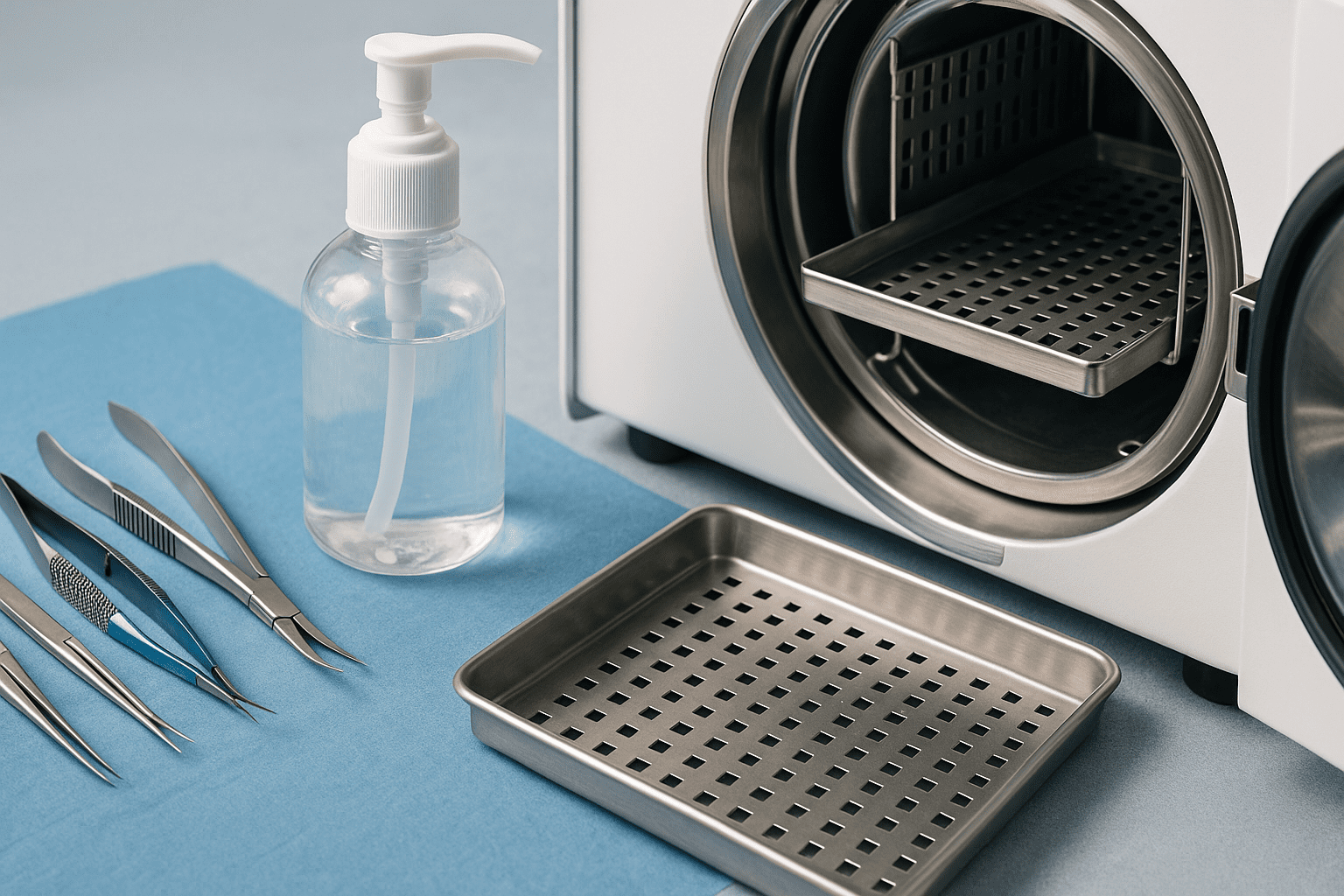
🔥 Step 4: Sterilization – Autoclaving with Care
Most ophthalmic instruments are designed to withstand autoclave sterilization, but precision tools require special handling.
Autoclaving guidelines:
-
Use distilled water in the autoclave.
-
Do not overload trays — steam must circulate freely.
-
Keep titanium and steel instruments separate to prevent discoloration.
-
Allow instruments to cool gradually before handling to prevent thermal shock.
Avoid dry heat sterilization unless specified by the manufacturer — it may damage delicate tips or joints.
🧰 Step 5: Lubrication and Inspection
After sterilization and before storage, inspect every instrument carefully.
Check:
-
Alignment of tips
-
Smoothness of joints
-
Sharpness of blades
-
Absence of corrosion or discoloration
Apply a medical-grade instrument lubricant (surgical milk) to hinges and joints — this extends the life of your instruments significantly.
🧳 Step 6: Proper Storage
Store sterilized instruments in sterile trays or pouches with silicone matting to protect fine tips.
Ensure the storage area is:
-
Dry and free from humidity
-
Away from direct sunlight or heat sources
-
Clearly labeled for different instrument sets
Titanium instruments should be stored separately to prevent contact corrosion with other metals.
⚠️ Common Mistakes to Avoid
-
Using tap water for cleaning or autoclaving.
-
Allowing blood or saline to dry on the surface.
-
Storing wet or unlubricated instruments.
-
Mixing titanium and stainless steel instruments in one tray.
✅ Conclusion
Proper care and sterilization of ophthalmic instruments ensure not only longer lifespan but also consistent surgical precision and patient safety. By following these best practices, clinics and hospitals can maintain the integrity of their instruments and reduce replacement costs.
At Ankur Metal Works, we manufacture and supply high-quality ophthalmic instruments — both stainless steel and titanium — designed for precision, durability, and ease of maintenance.
If you’re looking for premium-quality, reusable ophthalmic tools, explore our product range today.